Introduction
Managing
the finances of a church often requires trial and error to establish the best
practices for a particular church. Small churches may use their normal office
personnel to handle finances, while larger congregations often employ accountants
or a financial advisory board to oversee the budget, donations and purchases.
Generally have high expectations of religious organizations and churches. For
the most part, donors and attendees recognize that enormous needs exist that
the church is called upon to meet, and they usually want to respond adequately
to help the church meet those needs.
However,
they also want to be assured that the funds they give, many times
sacrificially, are being used effectively and that the church is actively involved
in ministering in a way that is pleasing to the Lord. So, there can be no
acceptable alternative to financial accountability.
THE ROLE OF THE
TREASURER
The
Treasurer is one of the central leaders of a congregation, with a role that is
both macro and micro – monitoring the big picture as well as paying attention
to the details. The Treasurer is called upon to explain the church's financial
resources, thereby assisting the members of the congregation as they make
decisions about the mission and ministry of the church. The Treasurer is also
responsible for making sure that all financial de-tails are handled with
accuracy, including recording contributions, paying bills, issuing paychecks,
and making payroll tax deposits. In addition, the Treasurer establishes
procedures for ensuring that funds are adequately safeguarded and files are
clearly organized and maintained. It's a big job! [1]
Massachusetts
law requires a non-profit corporation to have at least three officers: a President,
a Clerk, and a Treasurer. The President is the elected leader of the
congregation. The Clerk keeps the official records and minutes. (Note that
Massachusetts law requires that the clerk be a resident of Massachusetts, or
that a resident agent be appointed.) The Treasurer is legally responsible for
all financial aspects of the church for all groups within the church, such as
the youth group, women's fellowship, nursery school, and any other groups who
handle money or bank accounts. The Treasurer is also responsible for compliance
with federal and state requirements for payroll reporting and withholding. Many
churches today are finding that the best person for the Treasurer's position
does not necessarily have the time or skill available to perform the day-to-day
bookkeeping tasks, which can take quite a few hours per week. These churches
have either decided to hire a bookkeeper or have incorporated the day-to-day
bookkeeping tasks into the job description of the church administrator or other
employee. This allows the Treasurer to fill a broader role: signing checks,
managing cash flow, and interpreting financial reports.
[2]In all cases, it
is essential that the Treasurer and any financial personnel have a basic
understanding of non-profit finance and church finance, so that financial
recordkeeping and reporting is transparent, accurate, and in compliance with
legal requirements. In this way, the church's financial resources can be fully
supportive of the congregation's mission and ministry.
Record Keeping
The
most important aspect of a church’s financial administration is accurate and
detailed record keeping. Churches should keep accurate records of accounts
payable and expenses, as well as gifts and donations. Churches should keep
receipts detailing all expenses for tax purposes. Many churches use record
keeping software, such as QuickBooks or Peachtree Accounting, to make record
keeping easier and more efficient.
Budgeting
Proper
and thorough budgeting is important for all churches, especially those with
smaller congregations that have more financial constraints. A sound church
budget is also important due to the unpredictable nature of church finances.
While many churches make fairly accurate predictions on the amounts they will
receive as donations and gifts throughout the year, these numbers are often
unpredictable.
It
is wise to discuss budgeting at meetings with church officers and board members
to decide where to allocate money. Churches should consider all expenses when
creating a budget. Repairs, maintenance and upgrades to the church facilities
often take a large portion of the budget; the church board must decide how to
divide the remaining funds between programs, functions, groups and activities.[3]
The golden rules
of church finance management
Almost
every day the news tells of another financial scandal. Corruption in America
has become so commonplace that many Americans are now assuming even some of the
most trusted institutions are corrupt. The church is not lost in this
situation. In today's culture, the church cannot afford to be reactive, but
remain proactive in managing its finances above reproach.
The
following golden rules will help counterbalance today's atmosphere of mistrust
regarding the management of church finances[4].
1)
Financial managers should first be respected as
spiritual leaders.
Often,
churches ask individuals to serve in these trusted leadership roles because of
their positions of leadership in the community and business world. However,
their spiritual maturity should be considered first and foremost before asking
them to help manage the church's finances. Ask about their personal devotional
life and witnessing efforts. Also, a leader should be called by God to serve in
these important leadership roles. The future direction of the church often
falls on these individuals' shoulders.
2)
Financial managers should maintain the highest
possible integrity.
There
should be not even a hint that church finances are not being managed properly.
Adopt a policy that any purchases over a certain dollar amount must be placed
up for competitive bidding. Don't award insurance coverage to a particular
company just because the agent is a member. Business owners who belong to your
church should welcome competitive bidding as an opportunity to provide the
church with the best value. The "good ol' boy" system does not have a
place in today's church. With such a lack of integrity in the marketplace, the
church needs to stand fast.
3)
Provide detailed financial reports to church members.
Creating
detailed financial reports can be difficult. How much information is too much?
While the church staff's compensation might need to be kept confidential for
various reasons, the other aspects of church finances should be available to
members who request it. Provide reports through annual financial reviews or on
a monthly basis.
4)
Enforce checks and balances at every level.
The
church treasurer should not be involved in the receiving, counting, and
depositing of church funds. Traditionally, the role of the church treasurer is
to disburse, record, and report how the church is managing its funds. Also,
different individuals should carrry out the roles of receiving, counting, and
depositing the church's funds. If possible, create a rotation system of
unrelated members to serve in these capacities.
5)
Church members must have the final say in financial
matters.
While
daily church financial management might be delegated to various staff members
or committees, these individuals must remain accountable to the church at
large. The church should never delegate total responsibility to a select group
of individuals. It has been said that absolute power corrupts absolutely.
Everyone needs accountability in financial management. Financial managers must
always remember that church assets are God's. He deserves honor in this important
aspect of His work. The world is looking for people they can trust. How will
God's church measure up?[5]
Managing
the finances and payroll with regard to church employees is another important
issue to consider when deciding how to best administer a church’s finances.
Even the smallest churches usually have a few hourly or salaried employees that
must be paid on a regular basis. Taxes and legal requirements for churches are
very different from the laws that apply to most other types of organizations and
businesses. It is important for churches to have an accountant familiar with
non-profit organizations available to discuss tax and payroll laws.
Policies
Churches
need to have written, enforceable financial policies in place to prevent
budgeting or legal problems. Many churches have loans, credit cards and petty
cash accounts that several staff members use. By outlining policies detailing
acceptable ways to use the accounts and money, churches are better able to
track their funds and expenditures. Churches should have a treasurer or a board
of financial advisors in place to track the usage of the money and accounts so
that there is an appropriate checks and balances system in place. Having
trusted staff members oversee the use of church money can minimize the
potential for misuse and make it easier to spot violations of church policy
when they occur.
What is
financial accountability?
Financial
accountability is based on the principle of financial stewardship. A steward is
one who occupies the position of manager of the owner's possessions. He or she
is required to exercise responsible care over funds and assets entrusted to him
or her. Few stewards attain the position of
honor and trustworthiness without submitting to a system of accountability, a
system where clear explanations of all financial activity are detailed,
recorded, and reported to donors, constituents, and/or attendees.[6]
Because
Indian tax laws provide special tax treatment of churches and religious
organizations, churches are being, at the very least, deficient if not
deceptive if they don't fully disclose all financial actions and transactions. Several
organizations provide leadership and counsel in the area of financial
accountability for churches and Christian nonprofit organizations. The
Evangelical Council for Financial Accountability (ECFA) has established
standards to regulate proper systems of accounting, board operations,
disclosure of finances, and fair treatment of donors.[7]
Accountability
by a board
The
importance of a church having an active board cannot be over emphasized.
Whereas
neglect of financial accountability by a church board can lead to suspicion and
mistrust, active involvement protects the integrity of the church, its
leadership, and its objectives and ensures adherence of policies mandated by
the board.
A
church board should meet at least semiannually but preferably monthly. Meetings
should be more than listening to the pastor's or board chairperson's reports
and rubberstamping his or her recommendations.
ECFA
recommends a church board of no less than five people, none of whom are staff
members and/or department heads (except for the senior pastor who is generally
recognized as a member in standing of the church board and all church
committees, departments, and ministries) or related to each other by blood or
marriage.
Recording board
actions
The
actions of the church board should be recorded in detail by written minutes.
The minutes are then to be signed and dated by the board secretary and
distributed to all members within a week after the meeting concludes. These
minutes should be read at the next board meeting and approved as read or as
corrected by the board.
The actions,
responsibilities, authority, and functions of the church board can be greatly
diversified from church to church.
In
general, all church boards are responsible for approval and revision of church
administrative and/or legislative policy; serving as the church's administrator
of financial accountability; authorizing an annual independent audit of the
church's financial actions and transactions; authorizing the church's operating
budget; authorizing any major church acquisitions (property, equipment,
assets); and reviewing, revising, and/or authorizing the senior pastor's
compensation package.
Financial
Problems in the Church
Churches
are often thought of as bastions of faith, places where believers go to worship
and fellowship with other believers. Rarely do church members think about the
finances of their church. Churches, like individuals, are dependent upon income
to operate and must also manage their finances in a responsible fashion.
Problems within the church, while often a harsh critique on the leadership of
the congregation, can either pull the church apart or bring it closer together.
Common problems that plague churches are unmanageable debt levels, declining
contributions and taxation issues.
Debt
Debt
is a major problem facing churches. Debt is most commonly incurred in a church
setting as a result of a building project. Building projects are often a needed
expense, as the congregation has outgrown its current facility. Churches that
are seeking to initiate a building project should try to plan the project so
that as little debt as possible is incurred. A direct result of debt and its interest
is the decrease in available funds for the ministries of the church.
Declining
Contribution Levels
The
day-to-day operations of a church are primarily financed through the voluntary
contributions of its members. As a direct result of the recession that has
gripped the United States economy (2008 to 2010), contributions at churches in
America have steadily declined. One of America's most popular churches, The
Crystal Cathedral in Garden Grove, California, filed for bankruptcy in October
2010, citing a 27 percent decrease in revenues, which hindered the church from
making its payments on rising debt levels. Without directly pleading for the
congregation to increase giving levels, a church can increase revenues with
programs such as fundraisers and even more nontraditional techniques such as
allowing members to give by way of credit card processing.
Taxation Issues
As
the Internal Revenue Service (IRS) has included churches in the list of
tax-exempt organizations. However, churches can run afoul of the IRS tax code
that governs such organizations. One of the main reasons that a church can lose
its tax-exempt status is by dabbling in the political arena. A church may not
endorse any political candidate and it may not provide its facilities to be a
political forum for any political party. The IRS will strip a church of its
tax-exempt status upon an investigation into such matters. The removal of its
tax-exempt status can be devastating to a church, as it will add a significant
expense to the church's budget.
Best
Practices for Church Financial Internal Controls
On
a recent trip to Iowa for a few church visits, I spoke at length with Tammy
Masson, CFO Diocese of Des Moines, regarding a Manual for Financial Internal
Controls she was compiling for her Parishes and Schools. Tammy, a Certified Fraud Investigator,
mentioned the need for a “Best Practices” listing for all churches that would
help reduce or eliminate theft in church.
Much of the article below was taken from the Diocese of Des Moines
"Finacial Management and Control Manual for Parishes and Schools".
As
I watched over my morning cup of coffee, I saw that yet another church lost
thousands of dollars over several years from a trusted church secretary.
Whether
your church has a full-time paid staff, or all volunteers, life in a church
office can sometimes feel transient. New
finance committee members, church council members, volunteers, ushers and even
staff members can come and go, and not know exactly what is expected of them.
Administration
of church finances is a sacred trust. It
is very important for the Pastor to establish a strong system of internal
control because he/she has the responsibility for overall stewardship of the
Church. (Mason, 2009)
Every
church should have an outline of Internal Controls that will help you train new
staff, volunteers, finance committee members, and clergy on what is expected of
them to maintain the integrity of your organization, and the trust of your
supporters. Internal Controls are
essential to protect the assets of the church from waste, fraud, and
inefficient use. They will also benefit staff and volunteers by showing that
you have procedures in place to avoid the appearance of misbehavior, thus
protecting their reputation.
We
want to believe that those who serve the church are good, honest people. However, there have been numerous recent
reports of improprieties in churches and non-profit organizations. Good internal controls can minimize loss.
Because
each church is different, and each denomination organization may have a unique
set of standards, this article is designed to lay the groundwork for further
discussion and definitions of proper financial management by your church.
The
following system can be completed by fewer persons, depending on the resources
of the church. Use this as a starting
off point. You’ll need to determine how
much internal control is necessary for your church.
Contribution
Collection, Deposits and Data Entry
1. Encourage Church Members to use
Envelopes
a. Envelopes protect the member’s
offerings until they can be counted, it also assist the contribution entry
person making their job faster. Then save the envelopes, and you will have a
written record for each offering put into the plate.
b. Encourage Members to write checks or use
CMS Online Giving. This makes theft much
more difficult, and they will have a receipt if verification of the church
records is necessary.
2. Ushers – Provide your ushers with some
procedures to follow, in particular how to properly seal collection bags. Post the procedure and review with new
ushers. Let your ushers know how much
you appreciate their cooperation in successfully implementing these procedures.
a. Let the ushers know ahead of time the
number of collections in the service and assign tamper resistant, pre-numbered
bags for these collections plus an extra bag in the event of bag defect or
closing the bag too soon. Defective and
extra bags should also be submitted with collections.
b. DO NOT GIVE OUT CHANGE! The collection should be maintained in its
original form, and no change should ever be given from the collected funds.
c. Bags should be then transported to a
secure area for safekeeping prior to delivering to the counting team and if a
contribution was missed, place the loose envelope in the pocket of the sealed
bag or add to an additional sealed bag and transport to secure area for
safekeeping prior to delivering to the counting team.
3. Counter, Safes and Secured Area
a. Only a limited number of people should
maintain lock combinations and/or custody of keys to church safe(s).
· Combinations and keys should never be stored
in an unlocked desk drawer, hung on a wall, back of a door, or in an
unsupervised area where anyone can gain access to them. The safe should be in good working condition
at all times and ensure the safe door is not only shut, but also locked.
b. Limit the amount of funds secured in the
safe to a minimum.
c. Secure the counting area
· The count area should be free of
distractions with no “through traffic” to access a supply closet or bathroom by
individuals other than the counters, and limit the number of people, other than
counters, in the room; only the counters, clergy overseeing count, and/or
someone from the church staff should be in the room.
d. Provide Counting Supplies
· Collection worksheets, Bank Deposit Tickets,
Tape calculator, and New tamper resistant bags to secure funds to be deposited
after the count is complete.
e. Counters open the bags
· Assemble the counters (3 or more unrelated
people) then the Pastor or designee should deliver the tamper resistant bags
containing the collections. Also include
any other sources of income received by mail or in person to the church office.
· Counters must examine the bags for
tampering, breaches of the seal, or other irregularities and note the condition
of the bag and the bag number on a Bag Tracking Form. Notify the Pastor of any
irregularities on any bag.
f. Counters count the contributions
· Collections are counted, classified, and
recorded by alternating count teams, or duties are rotated amount several count
team members. The complete collection is
deposited. Don’t keep any cash at the
church as convenience cash.
· Photocopy loose checks and keep with
offering envelopes.
· Cash should be separated by denomination,
counted and banded. The amount and the
counters initials are recorded on the band.
A second counter should open the band, recounts, and records their
initials on the band.
· Run two adding machine tapes to verify the
total of the checks, and two adding machine tapes to verify the total of
currency and coin.
· Counters complete the count sheet by
documenting currency, coin, and checks.
The adding machine tape should be identified by indicated cash or check;
initialed and dated. One copy of the
tape is attached to the collection worksheet, along with each counter’s
initials and date, to provide accountability for the amounts.
· The counters record the currency and checks
on a duplicate bank deposit ticket with all information on the ticket
completed. The original bank deposit
ticket, along with the adding machine tapes, is sent to the bank and a copy
retained at church.
g. Supporting documentation received at
church
· The empty envelopes and photocopied loose
checks are given to contribution entry person who enters data in CMS
Contribution System.
· The count sheet, bank deposit copy, and bag
tracking form is retained at church and turned into bookkeeper. Bookkeeper should receive a deposit receipt
from the bank in a couple days. Match
the deposit receipt to the count sheet and attach. Enter deposit in CMS Ledger & Payables
system.
· If there are overages and shortages between
bank count sheet and bank deposit, immediately notify Pastor, and receipt
should be reviewed to determine if additional count team members should be
recruited or if count duties should be changed.
· Publish prior week’s collection totals in
weekly bulletin/newsletter.
Accounts Payable
1. Separation of Duties – While oftentimes,
those who choose to serve the church think the more they do, the more they
serve. This can oftentimes lead to a
lack of separation of duties.
There
are many churches allowing one person to handle all financial elements within
the church. They count the offerings,
make the deposit, record the offerings, paid the bills, sign the checks,
reconcile the bank account and prepare the financial records.
By
allowing one person to perform all of these duties, you are setting them up to
conceal wrongdoings. Even an accusation
of wrongdoings can damage the reputation of the staff member/volunteer, and the
church.
Instead,
split up the duties between several staff members and/or volunteers
a. Secretary/Receptionist
· Opens the bills and reviews them, then gives
them to the Bookkeeper
· Gives unopened Bank Statements to Pastor
and/or Church Administrator
· Receives and reviews signed checks from
Pastor/Treasurer/Authorized Check Signer and vendor remittance stub, seals
envelopes and mail
b. Bookkeeper
· Enters the bills in CMS, assigning each bill
to the appropriate vendor and account
A regular schedule, i.e. every Thursday, for
issuing checks allows for efficiencies in the business office and helps control
the work associated with paying bills.
v Petty cash should not be used to pay vendors,
contractors, or employee.
v Petty cash disbursements should also be
tracked in the CMS Fund Accounting system and periodically reconciled.
v The use of manually created checks is
discouraged.
a. If a manual check is used, i.e. an
authorized check signer takes a check to a retail store; the receipt should be
promptly taken to the bookkeeper so the transaction can be reported.
· Prints the checks in CMS on 3 part check
v Blank check stock should be kept in a locked
location, preferably in a safe or fireproof filing cabinet, and access limited
to those who are authorized to prepare checks.
This helps reduce the risk of stolen or forged checks.
· Staples church copy of stub of a 3-part
check to associated bill and gives to Treasurer/Pastor
· Before January 31st, compiles 1099’s for non-incorporated
vendors who were paid over $600 in the calendar year
c. Pastor/Treasurer/Authorized Check
Signer
· Reviews bill and check for accuracy
· Signs checks
v Two people should be required to sign any
check over a pre-determined amount. The
amount requiring a second signature can be pre-printed on checks, i.e. “Any
check over 2,000 is required to have two signatures”.
v The signature documentation (signature card)
held by the bank should also show this restriction.
v The Pastor must be included as an authorized
signer on all accounts as administrator of the church and its affiliated
organizations. This ensures the Pastor
is aware of all accounts in the name of the church. This also protects the misuse of the parish
tax ID number.
v Individuals with access to record entries in
CMS Fund Accounting who receive and process cash receipts should not be
authorized signers. This separates the
duties of those with control over cash to insulate the individual from any
implication or temptation of wrongdoing.
v Signature stamps should never be used. This way, all cash outflow is properly
reviewed and authorized. If you have a
signature stamp, it should be kept locked up and used only with authorization
from the Pastor for correspondence purposes only.
v NEVER SIGN A BLANK CHECK! Blank or partially blank checks should never
be signed. Only sign a check when the
payee and dollar amount are filled in and there is supporting documentation.
· Removes check, vendor copy of stub, vendor
remittance stub and provided envelope (unsealed) and hands to secretary for
mailing.
v It’s a good practice to hand the signed
checks to a third party, not the person preparing the checks, to review and
mail. This prevents the vendor
remittance stub from being swapped out upon mailing, i.e. someone paying their
personal electric bill with a church check.
· Gives church copy of bill back to bookkeeper
for filing.
d. Pastor/Church Administrator/Finance
Board
· Bank reconciliation
v Bank Statements and cancelled checks should
be received directly by the Pastor or Church Administrator, who should:
a. Open and review to ensure payees are
valid and signatures are authentic
b. Review endorsements and determine if
they are genuine
c. Determine that all transactions have
been authorized
d. Determine the balance appears
reasonable.
e. Then sign and date the bank statement to
indicate his/her review.
v Bank Reconciliations should be performed each
month within ten days of receiving the bank statement. This can help ensure that any errors can be
found and corrected quickly by either the bank or the church.
v Bank Reconciliations should be performed by a
third party, one who does not sign the checks, keep the books, or process the
receipts. A finance board member, the pastor, or business manager should be
reviewing bank reconciliations on a monthly basis, dating and signing off on
them.
· Internet
Banking/ACH Transfers/Wire Transfers
v While Internet Banking can be quite
convenient, it can also open the church for a great degree of exposure and
should always be monitored by the Pastor and/or Church Administrator.
v Any individual who has access to these online
transactions literally has an open checkbook.
v It is recommended that only the Pastor and/or
Church Administrator that releases the funds and should be the only holder of
the administration password.
v Once a transaction has been completed, he/she
should generate a bank report that details the transactions, signs and dates
it, and forwarded to the bookkeeper for recording in the CMS Fund Accounting
system.
v If your church uses the CMS Payroll Direct
Deposit feature, or if an outside payroll service is used, the Pastor and/or
Church Administrator should be signing off and reviewing every report processed
by the bookkeeper.
· Credit Cards
v Again, another convenience, but can open the
church up to more exposure.
v Use the CMS Ledger & Payables Credit Card
feature to track the individual expenditures (including vendor, amount, date
and related expense account) and reconcile the credit card statement each
month.
2. Bank Accounts
a. Number of Bank Accounts – The number of
accounts should be kept to a minimum.
This also helps streamline the accounting process. The separation of
funds for different activities or programs can be done using the General Ledger
rather than having a separate bank account for each.
b. Other Church Organizations – Any and all
checking, savings and investment accounts must be included on the church
general ledger. This helps guarantee
that the financial statements are accurate and allows the finance board and the
church members to have a complete picture of the finances of the church. It is the responsibility of Pastor to oversee
the finances of the parish and require full disclosure of all accounts.
c. Name of Bank Account and Investment
Accounts – Pastors, clergy, deacons, committee members, staff and volunteers
should not hold assets in their own name or purchase in their own name any
property that rightly belongs to the church.
Bank deposits must be made in the name of the institution from which
these funds originated.
3. Other Church Organizations
a. Organizations associated with the church
should be recognized by the church council as a matter of written record and
should be subject to the ultimate fiscal control by the Pastor.
b. An itemized record of receipts and
expenditures should be filed in the church office periodically (monthly,
quarterly, or annually) and made available upon request of the Pastor.
c. The church office should be reviewing,
signing and dating, or completing the bank reconciliation and reviewing the
cancelled checks on a regular basis (monthly, quarterly, or annually).
d. Organizations should only have separate
bank accounts based on the approval of the Pastor.
e. The Pastor should be included as an
authorized signer on all affiliated organizations that use the church tax ID
number. This ensure the Pastor is aware
of all accounts in the name of the church, and prevents an organization from
keeping church related assets (bank accounts) out of the control of the Pastor
with the ability to close the account or put money in an account the Pastor is
not aware or has access to.
4. Payroll
a. All church staff should be paid a
pre-determined salary and the amounts must be reported on a W-2 annually.
· Clergy Housing allowance should be voted on
in December for the following year.
b. All Payroll taxes must be paid on time.
5. Periodic Audits
a. Internal Audits
· Every church should have an internal audit
committee in place. They can be church
members who have financial, banking and/or business backgrounds.
· Periodically throughout the year, they
should review the financial records for discrepancies and ensure the church is
in compliance with the law.
b. External Audits
· Every church should hire a CPA firm to review
the financial records of the church annually.
6.
Other Best Practices
a. Create an organizational chart which
outlines the role of each staff member/volunteer. This can clarify the responsibilities of each
position, and can eliminate confusion and overlapping of duties.
· This can also help should a junior member of
the staff who may spot a problem, go to the right staff member to voice a
concern.
b. Have a check request form in place that
must be filled out each time a check is needed.
This form can be reviewed and approved before the check is written. This also allows for a paper trail and the
check writing procedure would have some internal controls in place to keep
everyone honest.
c. Accounting records should be safeguarded
at all times. It’s important that the
financial records remain at the church and not at a member’s home. This is confidential information and should
not be carelessly shared with anyone. If
the financial data (or checks/deposit slips) are taken off site, there is a
greater possibility that the information could be destroyed, stolen or lost.
d. Personnel
· Most embezzlers are repeat offenders. Screen potential new employees carefully, and
contact personal and professional references, and former supervisors.
· Remember that all of the checks and balances
you implement will always have flaws. If
you hire a skilled embezzler whose sole intent is to steal from the church, you
may not find out about it until a large amount of money goes missing.
· Bond your employees. Blanket bonds are popular with churches
because all employees may be covered.
Check with your church insurance policy for this coverage. (Fifty
Internal Control Practices for Every Church)
· Train new employees and volunteers!
v Provide them with a copy of your internal
controls manual.
v If the new employee will be working in the
CMS People Products or CMS Fund Accounting, utilize the CMS TeleTraining
offerings to get them started on the right foot.
Conclusion
Day
after day, thousands of church employees and staff personnel work tirelessly
and selflessly to fulfill the church's obligations as established by Jesus,
only to find many within the community casting suspicions on them due to the
highly publicized mismanagement and deceptions of a few.
By
establishing and submitting to a system of financial accountability, pastors,
staff members, and churches can eliminate unnecessary suspicion of financial
mismanagement and mistrust.
Bibliography
1.
Mason,
T. (2009). CFO Diocese of Des Moines. Financial Management and Control Manual
for Parishes and Schools , 2.
[2]
Massachusetts General Laws – Chapter 156, Section 21
2.
[3]
Fifty
Internal Control Practices for Every Church. (n.d.). Retrieved from Dicoese of
the http://dowoca.org/files/treasurer/Internal_Control_Practices_.pdf
3.
[4]
Henrickson,
K. P. (2006, September). Financial Management in the Church. Retrieved from http://home.comcast.net/~kphenrickson/interncontr.htm#_ftn2
4.
[5]
Leadership
Handbook of Management and Administration: Practical Insight from a Cross
Section of Ministry Leaders. Berkley, James D., ed. Grand Rapids, MI: Baker
Book House Co., 1994.
5.
[6]
Primarily
meant for ministers, this volume contains articles by a variety of experts and
includes chapters on a multitude of management issues and is full of practical
advice
6.
[7]
Accountable
Leadership, A Resource Guide for Sustaining Legal, Financial, and Ethical
Integrity in Today's Congregations revised and expanded. Chaffee, Paul. San
Francisco, CA: Jossey-Bass Publishers, 1997.
1.
Mason,
T. (2009). CFO Diocese of Des Moines. Financial Management and Control Manual
for Parishes and Schools , 2.
2.
Fifty
Internal Control Practices for Every Church. (n.d.). Retrieved from Dicoese of
the West: http://dowoca.org/files/treasurer/Internal_Control_Practices_.pdf
3.
Henrickson,
K. P. (2006, September). Financial Management in the Church. Retrieved from http://home.comcast.net/~kphenrickson/interncontr.htm#_ftn2
4.
Leadership
Handbook of Management and Administration: Practical Insight from a Cross
Section of Ministry Leaders. Berkley, James D., ed. Grand Rapids, MI: Baker
Book House Co., 1994.
5.
Primarily
meant for ministers, this volume contains articles by a variety of experts and
includes chapters on a multitude of management issues and is full of practical
advice
6.
Accountable
Leadership, A Resource Guide for Sustaining Legal, Financial, and Ethical
Integrity in Today's Congregations revised and expanded. Chaffee, Paul. San
Francisco, CA: Jossey-Bass Publishers, 1997.
7.
Lyle
Shaller describes this book as "…a plea for congregational leaders to be
competent, informed, accountable, and in touch with contemporary reality."
The leaders of any congregation are responsible for the operations and health
of the institution as well as the personal safety of members, guests and
property. This book exploresthe ethical, legal, and financial responsibilities
of lay and clergy leaders in religious congregations. Each chapter is followed
by an extensive bibliography. This is a must read book and an invaluable
resource.
8.
Churchworks:
A Well-Body Book for Congregations. Heller, Anne Odin. Boston, MA: Skinner
House Books, 1999.
9.
Anne
Odin Heller is District Executive of the UUA Pacific Northwest District. She
has served as minister to both small and large congregations, and using the
metaphor of the human body, she has created an accessible and ingenious
handbook that provdes essential advice for growing and sustaining a healthy
church. She included helpful models for developing congregational bylaws, staff
manuals, financial policies and procedures and many other mainstays for church
administration.
10.
Church
Secretary's Communiqué; The Newsletter for Church Office Professionals. Cobble,
James F., Jr., ed. Matthews, North Carolina: Christian Ministry Resources.
Published monthly.
11.
This
monthly publication consists of four pages of practical suggestions and
articles on subjects such as stress, computers, goal setting, productivity,
filing, volunteers, ethics, security, authority, and the secretary's
relationship with the minister and members of the congregation.
12.
Clergy
Desk Book. Holck, Manfred, Jr. Nashville: Abingdon Press, 1985.
13.
Directed
toward the minister as manager, this book includes organization and structure,
staff relationships, volunteers, building and grounds, publications, staff
compensation, bookkeeping, fund-raising, and membership.
14.
The
Church Office Handbook; A Basic Guide to Keeping Order. Shearn, Carol R.
Wilton, Connecticut: Morehouse Barlow Co., 1986.
15.
Carol
Shearn, an experienced church administrator, has written a practical book with
step-by-step instructions and reproducible forms for managing the mountains of
information flowing through the church office including membership records,
filing systems, financial records and taxes, inventory, bulk mailing, and more.
16.
Church
Administration Handbook; Resources for Church Leaders. Powers, Bruce P.
Nashville: Broadman Press, 1985.
17.
This
comprehensive treatment of church administration includes a variety of forms,
and a chapter on personnel with useful job descriptions. Published in 1985 but
the basics are still basic!
18.
The
Congregational Handbook: How to Develop and Sustain Your Unitarian Universalist
Congregation. Unitarian Universalist Association. Third Edition. Edited by
Lawrence X. Peers. Boston: Unitarian Universalist Association, 1995.
19.
This
broad guide to the resources of the UUA also offers general guidelines on a
wealth of subjects such as how to conduct a goal-setting meeting, a long-range
planning process, and an annual canvass, as well as describing the various
aspects of church life from recruiting volunteers to assimilating new members.
A must-have tool for board members and committee chairs.
20.
How
to Manage Your Church; a Manual for Pastors and Lay Leaders. Walz, Edgar. St.
Louis: Concordia Publishing House, 1987.
21.
Clearly
presented, this book focuses on the principles of church management, job
descriptions, staff relationships, and special problems.


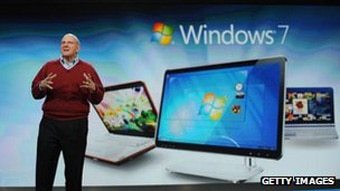
 ബ്രൗസര് പ്രശ്നത്തിന്റെ പേരില് മൈക്രോസോഫ്റ്റിന് യൂറോപ്യന് കമ്മീഷന് 73.1 കോടി ഡോളര് (3800 കോടി രൂപ) പിഴ ചുമത്തി. യൂറോപ്യന് യൂണിയന് രാജ്യങ്ങളില് മൈക്രോസോഫ്റ്റ് അതിന്റെ സ്വന്തം ബ്രൗസറായ ഇന്റര്നെറ്റ് എക്സ്പ്ലോറര് മാത്രം പ്രോത്സാഹിപ്പിച്ചതിനാണ് പിഴ.